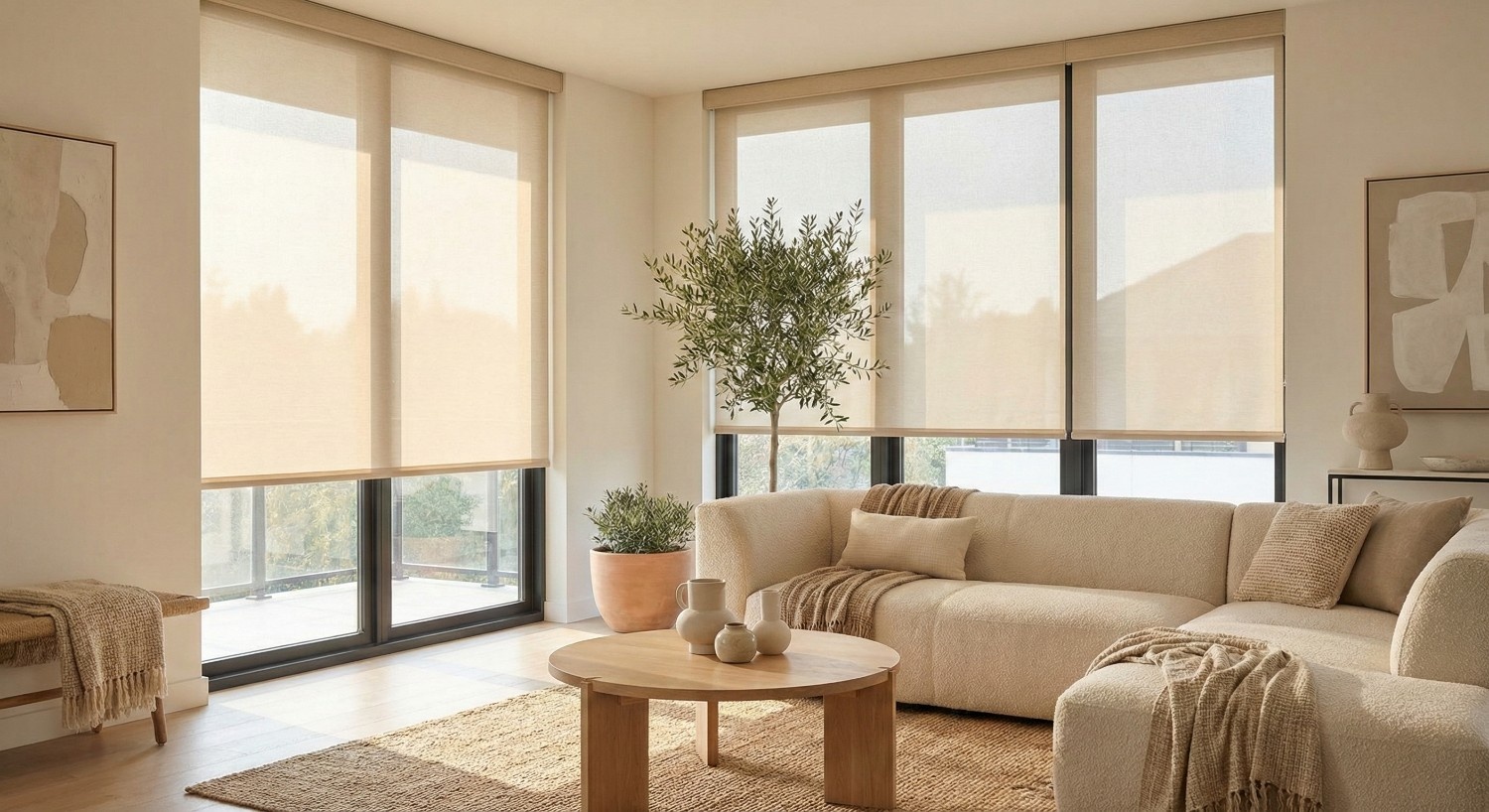
If your living space feels stuck in the past, your windows might be the culprit. Replacing clunky, old-fashioned window coverings is one of the most effective ways to instantly refresh your home’s aesthetic. To deliver exactly what this guide promises, we will detail the 7 modern window treatments to replace dated blinds and refresh your home: Cellular Shades (Honeycomb Shades), Roller & Solar Shades, Woven Wood Shades, Roman Shades, Modern Drapery and Curtains, Plantation Shutters, and Smart and Motorized Shades.
First, What Makes Blinds Look Dated?
Before exploring modern window coverings, it is important to understand which fixtures are actively aging your home. For decades, builders relied on specific, low-cost options that no longer align with trendsetting interior styles. If your home currently features any of the following, it is time for an aesthetic refresh.
- Thin Aluminum Mini-Blinds: Popularized in the 1980s and 90s, these one-inch metal slats bend easily, collect heavy dust, and create a cluttered, sterile “office” aesthetic.
- Plastic Vertical Blinds: Standard on older sliding glass doors, these PVC panels are notorious for yellowing, snapping off their clips, and making a loud, clacking noise when drawn.
- Faux Wood Blinds with Wide Tapes: While standard faux wood is durable, versions featuring wide, contrasting cloth tapes look heavy and visually shrink the window size.
- High-Gloss or Heavily Grained Finishes: Blinds with a shiny, plastic-like sheen or heavily artificial wood-grain textures look inexpensive compared to today’s preferred matte finishes.
7 Stylish Replacements for Your Old Blinds
Upgrading your windows means prioritizing energy efficiency, streamlined mechanics, and beautiful textiles. Here are the seven specific modern window coverings that are actively replacing dated blinds in homes today.
1. Cellular Shades (Honeycomb Shades)
Cellular shades are engineered for maximum energy efficiency and minimalist appeal. They are constructed with unique, honeycomb-shaped fabric pockets that trap air, creating a powerful layer of insulation between your room and the glass.
Because they compress tightly at the top of the window, cellular shades practically disappear when fully raised, offering an unobstructed view. Homeowners typically spend between $50 and $200 per window for standard sizes. For ultimate versatility, look for “top-down/bottom-up” models, which allow you to lower the top of the shade for natural light while keeping the bottom closed for privacy.
2. Roller & Solar Shades
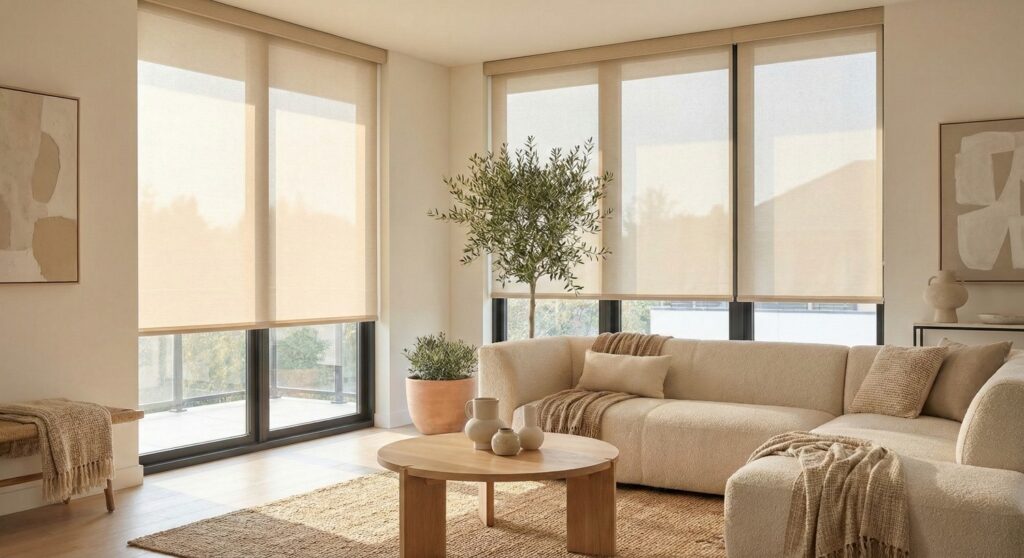
For a truly sleek, uncluttered appearance, roller shades are the definitive choice. Constructed from a single piece of flat fabric that rolls neatly around a cylindrical tube, these sleek window shades complement modern and minimalist decor perfectly.
A highly popular subset of this category is solar shades. These are specifically woven to block harmful UV rays and reduce screen glare while preserving your view of the outdoors. They are ideal for sun-drenched living rooms or home offices. Depending on the opacity and fabric quality, standard manual roller shades range from $40 to $150 per window.
3. Woven Wood Shades
If your goal is to add organic warmth and texture to a room, woven wood shades are the perfect replacement for sterile plastic blinds. These stylish window treatments are crafted from natural materials like bamboo, reeds, jute, and woven grasses.
Because they are made from natural fibers, no two woven wood shades are exactly alike. They filter sunlight beautifully, casting a warm, dappled glow across the room that suits coastal, bohemian, and modern farmhouse aesthetics. Expect to invest between $60 and $250 per window for high-quality natural woven shades. If used in a bedroom, you can easily attach a blackout liner to the back for total privacy.
4. Roman Shades
Roman shades bridge the gap between the softness of traditional drapery and the clean functionality of a pull-down shade. When raised, the fabric folds up neatly into horizontal pleats, adding an architectural fabric element to the top of your window.
Available in an endless array of fabrics—from crisp white linen to bold, patterned cotton—Roman shades allow for deep customization. They instantly add an upscale, tailored look to dining rooms and primary bedrooms. Custom Roman shades typically cost between $80 and $300 per window, depending on the fabric grade and lining choices.
5. Modern Drapery and Curtains
Curtains are far from dated when hung correctly. The modern approach to drapery involves hanging simple, high-quality fabric panels high above the window frame and allowing them to gently kiss the floor, creating an illusion of grand, towering ceilings.
To achieve this look, avoid fussy tie-backs, ruffled valances, and pooling fabric. Instead, use a slim, matte black or brushed brass rod. Solid colors or subtle, textural patterns in linen, cotton, or velvet work best for a refreshed, modern look. High-quality, lined drapery panels typically range from $50 to $200 per panel.
6. Plantation Shutters
For a permanent, architectural upgrade, plantation shutters are a premier choice. Unlike the flimsy, narrow-slatted shutters of the past, modern plantation shutters feature wide, substantial louvers (typically 2.5 to 4.5 inches wide) built into a solid frame.
These treatments are incredibly durable, easy to wipe clean, and offer superior light control. Because they are considered a permanent fixture physically attached to the window frame, high-quality plantation shutters can actually increase your home’s resale value. They are a premium option, typically costing between $200 and $500+ per window.
7. Smart and Motorized Shades
The ultimate modernization of your home’s windows is motorization. Nearly any style mentioned above—from cellular shades to roller shades—can be outfitted with a quiet, battery-operated or hardwired motor.
Smart shades allow you to control your lighting with a remote, a smartphone app, or voice commands via smart home systems. You can program them to lower during the hottest part of the day to save on air conditioning, or to open gently at sunrise. Because they eliminate dangling pull-cords, they are also the safest option for homes with young children and pets. Motorized options generally start around $300 and can exceed $1,000 per window depending on the shade style and smart integration features.
Frequently Asked Questions
What is the best replacement for vertical blinds on a sliding glass door? Panel track blinds are the most functional and modern alternative. They feature wide, flat vertical panels of fabric that glide smoothly along a top track, offering a clean, sophisticated profile. Alternatively, floor-to-ceiling drapery on a smooth traverse rod provides a softer, highly elegant solution that easily pulls to one side.
Are wood blinds completely out of style? No, wood blinds are not entirely out of style, provided they feature the right details. Wide-slat wood blinds (measuring 2 inches or 2.5 inches) in classic, matte finishes like stark white, charcoal black, or natural, non-shiny wood stains remain timeless. It is specifically the glossy, thin-slat faux wood versions with bulky cloth tapes that look dated.
How do I choose the right level of light control? Your light control choice should directly match the room’s function. For bedrooms and media rooms, choose “blackout” materials that block 99% of incoming light. For living rooms and kitchens, “light-filtering” fabrics are ideal because they reduce harsh glare while keeping the space bright. For rooms with a stunning outdoor view that you wish to maintain, opt for “solar” shades with a 3% to 5% openness factor.
Conclusion
Saying goodbye to clattering, tangled, and yellowing window coverings is a transformative step in home design. By choosing any of these 7 modern window treatments to replace dated blinds and refresh your home—whether you prefer the insulating power of cellular shades, the organic warmth of woven woods, or the high-tech convenience of motorized rollers—you instantly elevate your interior. Evaluate your specific needs for light control, privacy, and budget, and invest in sleek, stylish treatments that will modernize your space for years to come.