Are you wondering how to reduce electricity bills without sacrificing your daily comfort? The secret to long-term savings lies within your regular routine. By adopting these 8 everyday habits that may reduce monthly electricity usage, you can significantly lower your home’s energy consumption and keep more money in your wallet. Let’s explore these specific, actionable steps to start shrinking your utility costs today.
Habit 1: Wash Laundry in strictly Cold Water
When looking at ways to reduce electricity use, start in the laundry room. Your washing machine temperature settings have a massive impact on your bill. Heating water accounts for roughly 90% of the energy your washer consumes during a cycle. Instead of alternating between warm and hot water cycles, change your dial to a strict “cold” setting for every wash. Modern detergents are formulated to clean effectively in cold water, and this single habit can save an average US household up to $60 annually in water heating costs.
Habit 2: Unplug “Vampire” Electronics
Many households overlook “vampire” energy—the continuous power consumed by electronics when they are plugged in but physically turned off. This phantom load can account for up to 10% of your total monthly electricity bill. A highly effective habit is to manually unplug items like coffee makers, phone chargers, toasters, and gaming consoles immediately after use.
Habit 3: Optimize Your Thermostat Settings
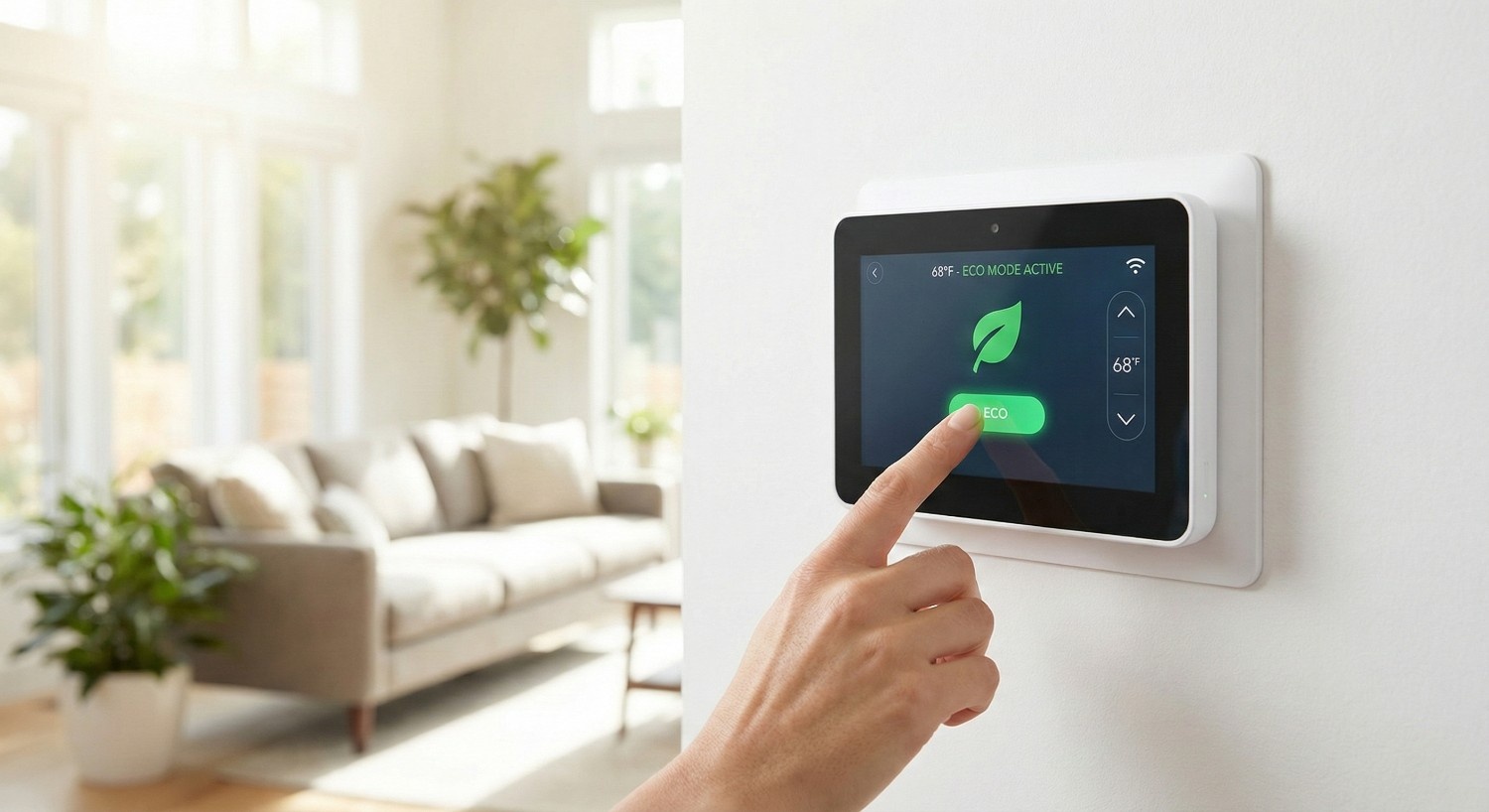
Space heating and cooling consume nearly 50% of a standard home’s energy. Adjusting your thermostat by just a few degrees creates major financial savings. The Department of Energy recommends making it a habit to set your thermostat to 68°F in the winter while you are awake, and lowering it further while you sleep. In the summer months, establishing a baseline of 78°F is the ideal target for balancing comfort and energy conservation.
Habit 4: Switch Your Lighting Habits
If you want to know how to save electricity with minimal daily effort, focus on your lighting. Make it a strict habit to turn off lights whenever you leave a room. Furthermore, support this habit by replacing outdated incandescent bulbs with modern LEDs. LED bulbs use up to 90% less energy than traditional bulbs and last up to 25 times longer, providing immediate and long-term reductions in your monthly usage.
Habit 5: Utilize a Smart Power Strip
Sometimes, the best habit is automating your home. Investing in a simple electric energy saving device can do the heavy lifting for you. A smart power strip is a highly effective device to reduce electricity bill costs. Costing between $25 and $40, these strips automatically detect when a primary device (like your living room television) is turned off and instantly cut the power supply to peripheral electronics (like soundbars, DVD players, and gaming systems) to eliminate phantom loads entirely.
Habit 6: Air-Dry Your Dishes
The heated drying cycle on your kitchen dishwasher uses a massive amount of electricity. A great everyday habit is to manually disable the “heated dry” setting before you press start. Once the wash cycle finishes, simply open the dishwasher door a few inches to let the dishes air-dry naturally. This basic habit reduces the appliance’s overall energy consumption by 15% to 50% per load.
Habit 7: Vacuum Refrigerator Coils
Your refrigerator runs 24 hours a day, making it a major, constant energy draw. Over time, dust, dirt, and pet hair accumulate on the condenser coils located at the back or bottom of the unit, forcing the compressor to work harder to maintain safe temperatures. Make it a biannual habit to pull the fridge out and vacuum these coils. Clean coils can improve your refrigerator’s energy efficiency by up to 30%.
Habit 8: Use Ceiling Fans to Supplement AC
Relying solely on your central air conditioning during the summer is an expensive habit. Instead, make it a daily practice to use ceiling fans to supplement your AC unit. Fans cool people, not rooms, by creating a wind-chill effect on your skin. By running a ceiling fan (ensuring the blades rotate counter-clockwise in the summer to push air down), you can comfortably raise your AC thermostat setting by 4 degrees Fahrenheit without noticing a drop in comfort.
Frequently Asked Questions
What is the best way to save electricity during peak hours? The most effective strategy during peak hours is shifting your heavy appliance usage. Utility companies often charge higher rates during the late afternoon and early evening (typically 4 PM to 8 PM). Make it a habit to run your dishwasher, clothes washer, and dryer either early in the morning or late at night during off-peak hours to secure lower energy rates.
How much money can these 8 everyday habits realistically save? By combining these 8 everyday habits that may reduce monthly electricity usage, the average US household can reduce their total monthly energy bills by 10% to 20%. Depending on the size of your home and local utility rates, this translates to hundreds of dollars in savings every single year.
Are there specific cooking habits that lower energy use? Yes. Using smaller countertop appliances like microwaves, slow cookers, or air fryers instead of the main electric oven uses significantly less electricity. If you must use the oven, keep the door closed while baking; opening the door drops the internal temperature by 25 degrees, forcing the oven to consume more electricity to reheat.
Conclusion
Lowering your utility costs does not require a massive lifestyle overhaul or expensive solar panel installations. By practicing these 8 everyday habits that may reduce monthly electricity usage—such as washing clothes in cold water, unplugging vampire electronics, and utilizing smart power strips—you take immediate control of your home’s power consumption. Start implementing these simple, actionable routines today, and watch your monthly electricity bill shrink over time.