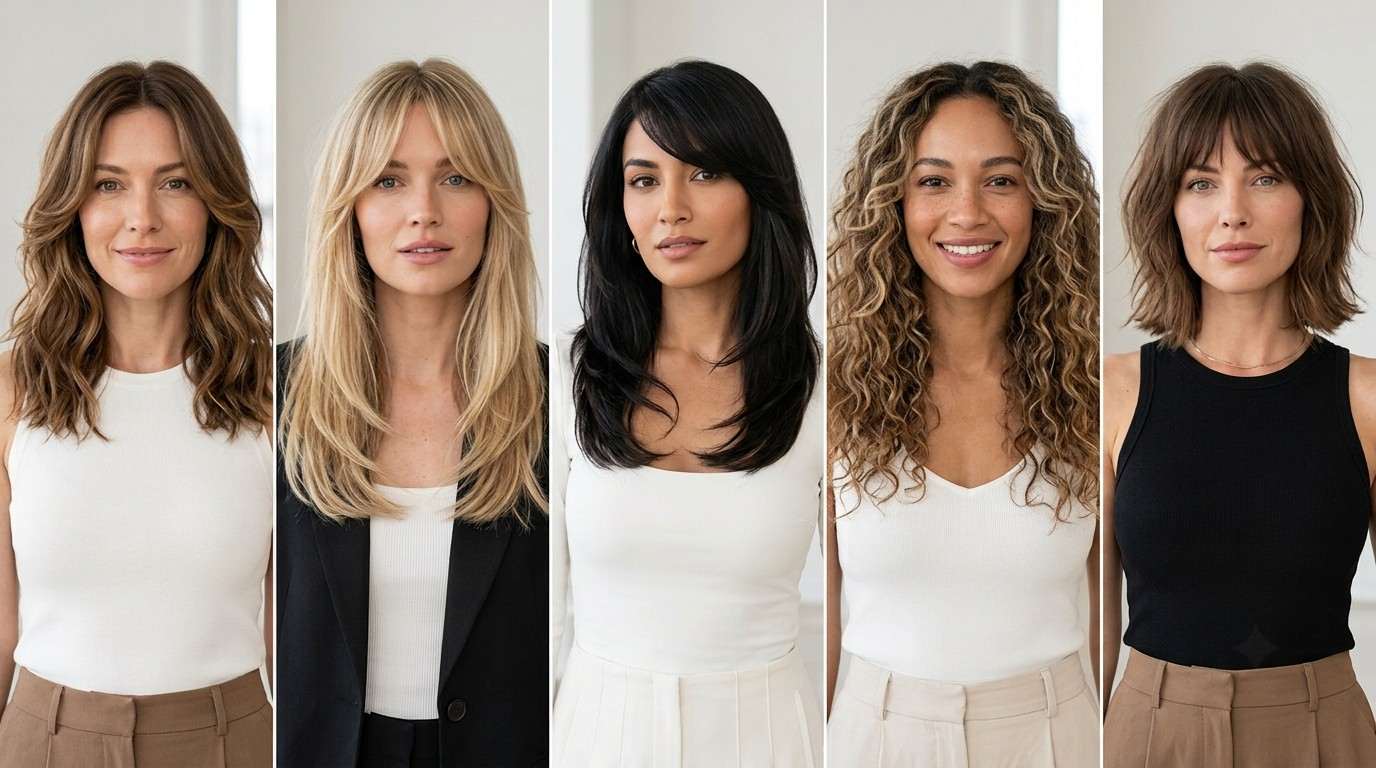
A hairstyle can change the way your face and overall appearance are perceived without requiring a dramatic transformation. The right cut, layers, or styling technique can add movement around the face, highlight certain features, and create a fresh appearance.

Face-framing hairstyles are especially versatile because they can be adapted to different hair lengths, textures, and personal styles. From soft layers to side-swept bangs, several simple approaches can give an existing haircut a refreshed look.
This article is intended for general informational and style purposes. Hairstyle results can vary depending on hair texture, density, face shape, and styling technique. Consider discussing your preferred look with a professional hairstylist before making a significant haircut or color change.
1. Soft Face-Framing Layers
Soft layers around the face are one of the most versatile ways to refresh a hairstyle. Instead of creating a dramatic change throughout the hair, the layers can gradually begin around the cheekbones, jawline, or another point that complements the individual’s features.
The gradual shape adds movement and can prevent longer hair from appearing too heavy around the face. It can also work with straight, wavy, and lightly curly textures when the layers are adapted to the natural pattern of the hair.
For a subtle change, ask for blended layers rather than sharply defined sections. This can create a softer transition between the shorter pieces around the face and the rest of the haircut.
2. Curtain Bangs
Curtain bangs continue to be a popular option for people who want to change their appearance without committing to very short, straight-across bangs.
These bangs are typically parted near the center and gradually become longer toward the sides. This creates a framing effect around the forehead and cheek area while allowing the bangs to blend into the rest of the hairstyle.
Curtain bangs can be adjusted for different hair lengths and textures. A stylist can help determine the appropriate length and layering based on how the hair naturally falls.
3. Side-Swept Bangs
Side-swept bangs provide another way to introduce movement around the face. Rather than falling straight across the forehead, they are styled toward one side and can blend into longer layers.
This style can work particularly well for people who want the appearance of bangs without a strongly defined horizontal line. The length can also be customized, ranging from a shorter fringe to a longer piece that gradually merges with the sides of the haircut.
Because hair growth patterns differ, discussing the natural direction of the hair with a stylist can help determine how easily the style can be maintained.
4. Long Layered Hair With Face-Framing Pieces
Long hair does not have to remain one length to create a refreshed appearance. Long layers combined with shorter pieces around the face can add dimension while maintaining overall length.
The first face-framing layer can be positioned according to the individual’s preferences and haircut. Additional layers can then be blended through the lengths to create movement without removing too much overall volume.
This option can be particularly useful for someone who likes long hair but wants a noticeable change without a short haircut.
5. Textured Bob With Framing Layers
A bob can provide a more noticeable transformation while still remaining relatively simple to style. Adding subtle face-framing layers to a bob can soften the overall shape and introduce movement around the sides of the face.
The length of the bob can vary from around the jawline to the shoulders, depending on personal preference and hair type. A slightly longer version can provide additional styling flexibility, while a shorter bob can create a more defined silhouette.
Texture can also change the final appearance. Straight hair may emphasize the shape of the cut, while waves or curls can give the style a softer and more relaxed finish.
Choosing the Right Face-Framing Hairstyle
The most flattering hairstyle is not necessarily the one that is currently trending. Hair texture, natural growth patterns, maintenance preferences, and lifestyle can all influence whether a particular style works well.
Before choosing a haircut, consider:
- Hair texture: Straight, wavy, curly, and coily hair can respond differently to layering.
- Maintenance: Some bangs and layered styles require regular trimming or styling.
- Length: Decide whether maintaining your current length is important.
- Daily routine: Choose a style that fits the amount of time you normally spend styling your hair.
- Personal preference: A comfortable hairstyle that suits your individual style can be more useful than simply following a trend.
A professional stylist can also help determine where face-framing pieces should begin and how they should blend with the rest of the haircut.
Refreshing Your Look Without a Dramatic Change
A new hairstyle does not always require cutting away a significant amount of hair. Small adjustments around the face can change the overall shape of an existing haircut while allowing most of the length to remain.
Soft layers, curtain bangs, side-swept fringe, long face-framing pieces, and textured bobs each offer different levels of change. The best option depends on the individual’s hair and the type of look they want to maintain.
Rather than choosing a hairstyle based only on its appearance in a photograph, consider how it will work with your natural hair texture and everyday routine.
Final Considerations
Face-framing hairstyles can be a simple way to give an existing look a fresh update. Layers and bangs can add movement, while changes in length and texture can create a different overall silhouette.
There is no single hairstyle that works for everyone. Factors such as hair type, maintenance requirements, face shape, and personal preference should all be considered before making a change.
With the right cut and realistic styling expectations, a face-framing hairstyle can provide a polished update while still allowing the look to feel natural and personal.