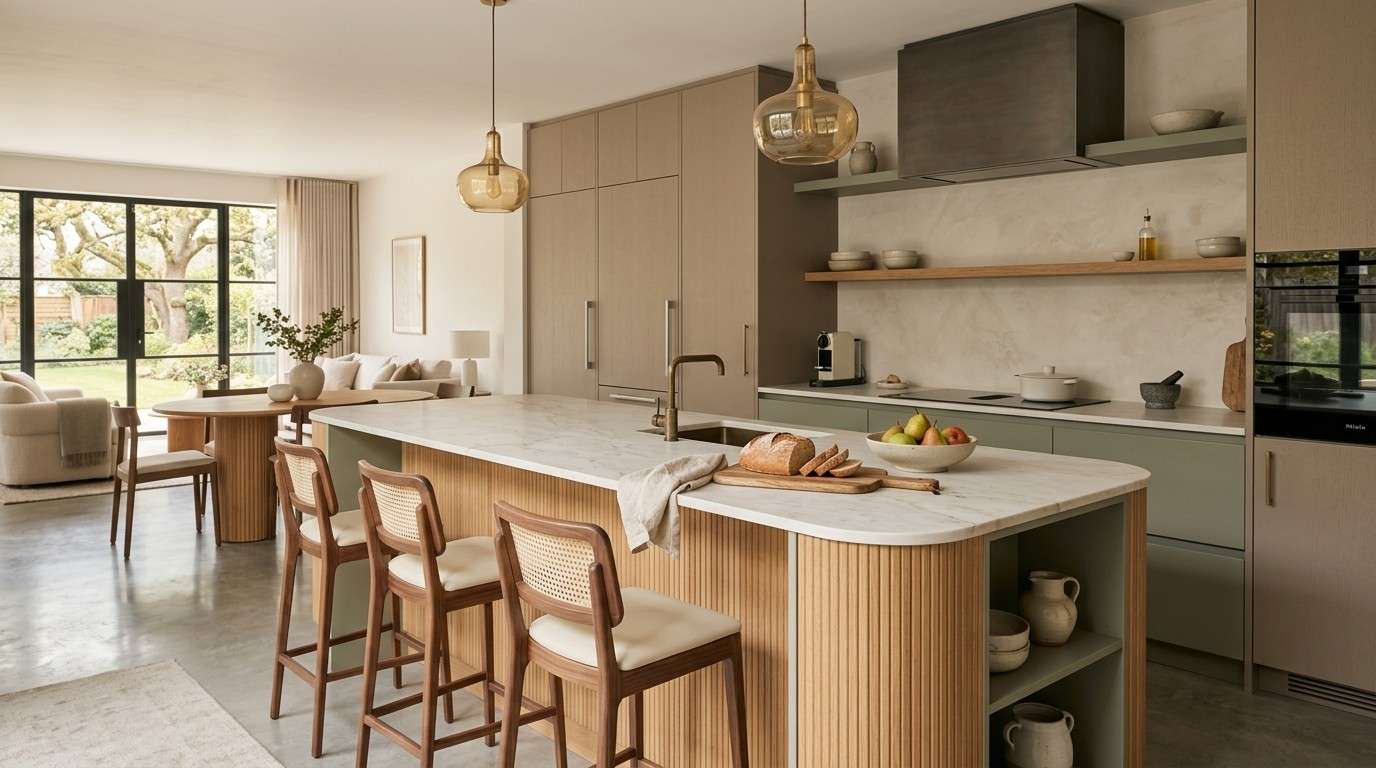
Kitchen islands have evolved far beyond being an additional countertop for food preparation. In modern homes, the island often serves as a place to prepare meals, enjoy casual breakfasts, organize kitchen essentials, work from home, and gather with family and friends.

In 2026, kitchen island design is becoming more flexible and personalized. Homeowners are exploring softer shapes, natural materials, contrasting finishes, multifunctional layouts, and furniture-inspired designs that make the kitchen feel both practical and inviting.
The latest direction is not simply about making an island larger. Instead, the emphasis is on creating an island that fits the available space and supports the way people actually use their kitchens.
Moving Beyond the Traditional Kitchen Island
For years, the standard kitchen island was usually a large rectangular structure positioned in the center of the room. It provided additional counter space and storage while creating a clear working area between the main kitchen cabinets.
That basic design remains useful, but today’s kitchens are increasingly designed around multiple activities. An island may now need to accommodate cooking, dining, storage, entertaining, studying, or occasional work.
This has encouraged designers to rethink the traditional island and explore designs that can serve several purposes without making the kitchen feel crowded.
How Kitchen Islands Are Changing in 2026
The biggest changes can be seen in the shape, materials, storage, and overall purpose of the island.
| Design Element | Traditional Approach | 2026 Direction |
|---|---|---|
| Shape | Mostly rectangular | Rectangular, curved, rounded, and furniture-inspired |
| Function | Food preparation and storage | Cooking, dining, work, storage, and socializing |
| Storage | Mostly closed cabinets | Combination of drawers, cabinets, and selective open storage |
| Materials | Matching kitchen finishes | Mixed materials and contrasting textures |
| Appearance | Built-in cabinetry | More furniture-like and personalized |
| Lighting | Mainly overhead lighting | Layered and task-focused lighting |
| Flexibility | Fixed installation | Fixed, modular, and movable options |
These changes reflect a broader interest in kitchens that can adapt to different routines rather than serving one specific purpose.
Multifunctional Kitchen Islands Are Gaining Attention
One of the most practical kitchen island trends for 2026 is multifunctionality.
Instead of using the island only for chopping vegetables or preparing meals, homeowners can design it around several everyday activities. One section might provide a food-preparation surface, while another offers seating for casual meals.
Drawers and cabinets underneath can provide additional storage, while a carefully positioned electrical outlet can make part of the counter useful as a temporary workspace.
This approach can be especially valuable in open-plan homes where the kitchen often connects directly with dining and living spaces.
Curved Kitchen Islands Bring Softer Shapes
Straight lines continue to work well in many kitchens, but curved and rounded islands are becoming an increasingly visible design choice.
A curved island can soften a room dominated by straight cabinets and hard edges. It may also create a more natural visual transition between the kitchen and nearby living spaces.
Depending on the layout, curved corners can also make an island feel less imposing. However, the shape should still provide enough usable counter space and comfortable clearance around the island.
For smaller kitchens, a modestly rounded peninsula or compact island may provide some of the visual appeal without requiring the footprint of a large custom island.
Furniture-Style Islands Add Character
Another notable direction for 2026 is the move toward islands that look more like furniture.
Instead of making the island appear identical to the surrounding cabinetry, homeowners can introduce a different finish, material, leg detail, or storage arrangement.
Freestanding worktables and furniture-inspired islands can create a more relaxed appearance. They can also make the kitchen feel less like a purely functional workspace and more like an extension of the home’s living areas.
This style can work particularly well in kitchens that combine traditional and contemporary elements.
Natural Materials and Warm Finishes
Material selection can dramatically influence the appearance of a kitchen island.
Natural wood, stone, textured surfaces, and warm finishes are being incorporated into contemporary kitchen designs to create a more welcoming atmosphere. Rather than matching every surface, designers can use contrasting materials to give the island its own identity.
Wood is particularly useful when homeowners want to introduce warmth into a kitchen dominated by painted cabinetry or stone surfaces.
A wood island paired with a stone countertop, for example, can create a balance between natural texture and a durable work surface.
Contrasting Island Colors Create a Focal Point
Kitchen islands can also provide an opportunity to introduce color without changing the entire room.
Instead of using the same cabinet color throughout the kitchen, homeowners can select a different finish for the island. Deeper greens, blues, earthy tones, muted neutrals, and natural wood finishes can create contrast while maintaining a cohesive appearance.
The island does not necessarily need to become the brightest element in the room. A subtle difference in tone or texture can be enough to distinguish it from the surrounding cabinetry.
When choosing a contrasting color, it can help to connect the island with another element in the kitchen, such as the flooring, backsplash, hardware, lighting, or nearby furniture.
Storage Is Becoming More Purposeful
Kitchen island storage is also changing.
Large open areas behind cabinet doors are being supplemented by drawers and specialized storage designed around the items people use most frequently. Deep drawers can hold cookware, while smaller compartments can organize utensils and everyday kitchen accessories.
Open shelving can be used selectively for cookbooks, serving pieces, or decorative objects. However, too much open storage can make a kitchen appear cluttered, so balance remains important.
The most effective storage design is one that makes commonly used items easy to access while keeping less attractive or less frequently used items concealed.
Smart Features and Practical Technology
Technology can be incorporated into a kitchen island without making it visually complicated.
Integrated electrical outlets, charging areas, task lighting, and appliance placement can improve everyday convenience. These additions are particularly useful when the island is also used as a workspace or family gathering area.
Lighting deserves particular attention. Pendant lights remain a popular choice for islands, but layered lighting can provide greater flexibility. Task lighting can support food preparation, while softer lighting can create a more relaxed atmosphere when the kitchen is being used for dining or socializing.
The objective should be practical integration rather than adding technology simply because it is available.
Kitchen Island Alternatives for Smaller Spaces
Not every kitchen has enough room for a large permanent island.
In smaller homes, movable islands, compact worktables, peninsula counters, and modular units can provide additional preparation and storage space while preserving valuable floor area.
A movable island can also offer flexibility because it can be repositioned when more open space is needed.
For narrow kitchens, a peninsula connected to existing cabinetry may be a more practical option than a freestanding island. The right choice depends on the kitchen’s dimensions, traffic flow, storage requirements, and everyday use.
Creating Better Movement Around the Island
A beautiful island can become frustrating if it makes the kitchen difficult to navigate.
Before selecting a design, homeowners should consider the distance between the island and surrounding cabinets, appliances, and walls. There should be enough room for people to move comfortably and for cabinet and appliance doors to open without creating conflicts.
Seating also needs careful consideration. If stools are included, sufficient space should be left behind the seats for people to walk through the area when someone is sitting at the counter.
The island should support the kitchen’s workflow rather than interfere with it.
Choosing the Right Kitchen Island Design
Selecting an island should begin with the needs of the household rather than with appearance alone.
Consider the following questions before making a decision:
- How will the island primarily be used?
- Is additional storage more important than seating?
- How many people regularly use the kitchen?
- Is there enough room for comfortable movement?
- Would a permanent island or movable unit work better?
- Which materials are suitable for the expected level of use?
- Does the island need electrical outlets or dedicated lighting?
- Should it match the surrounding cabinets or provide contrast?
Answering these questions can help narrow down the available design options and prevent the island from becoming an oversized feature that provides little practical value.
Kitchen Island Trends Worth Watching in 2026
Several design directions stand out when looking at kitchen islands in 2026.
- Multifunctional layouts that combine cooking, dining, storage, and other activities
- Curved and rounded designs that introduce softer visual lines
- Furniture-style islands that give kitchens a more personalized appearance
- Natural materials such as wood and stone-inspired finishes
- Contrasting colors that help define the island as a focal point
- Purposeful storage using drawers, cabinets, and selective open shelving
- Integrated lighting and electrical features designed around everyday needs
- Compact and movable alternatives for smaller or flexible kitchens
Together, these ideas show that the modern kitchen island is becoming less about following one fixed design formula and more about adapting the feature to the individual home.
Making the Island Work With the Rest of the Kitchen
A kitchen island should feel connected to the rest of the room.
Even when the island uses a contrasting material or color, repeating one or two design elements elsewhere can help create visual balance. For example, wood detailing on the island could be echoed through open shelving, furniture, or decorative accents.
The countertop, cabinet finish, flooring, lighting, and hardware should also work together rather than competing for attention.
A successful design does not require every component to match exactly. Instead, the different elements should share enough visual relationships to make the room feel intentional.
Conclusion
Kitchen island trends for 2026 reflect a broader shift toward kitchens that are flexible, comfortable, and designed around everyday life.
Curved shapes, furniture-inspired designs, natural materials, contrasting colors, purposeful storage, and multifunctional layouts are giving homeowners more ways to personalize this important part of the kitchen.
However, following every trend is not necessary. The most useful kitchen island is one that fits the available space, supports the household’s routines, and complements the overall design of the home.
Whether the right solution is a large multifunctional island, a compact movable unit, or a simple peninsula, thoughtful planning can make the feature both practical and visually appealing.
Disclaimer
The information provided in this article is intended for general informational and educational purposes only. Kitchen layouts, materials, construction requirements, and installation considerations can vary depending on the home and project. Homeowners should evaluate their individual space and consult qualified design or construction professionals when appropriate before beginning renovation or installation work.
Sources
- Houzz — Kitchen design and remodeling trend research
- Homes & Gardens — Kitchen island and kitchen design trend coverage
- Livingetc — Contemporary kitchen and color trend coverage
- Find Your Insights — Kitchen Island Trends 2026 reference article