You see “airplane cleaner” postings, but the details are thin. Is it a quick-turn crew or overnight reset work? What checks and badges slow down hiring? And which employers are real contractors versus sketchy middlemen? This guide is for anyone weighing entry-level airport work and next-step options.
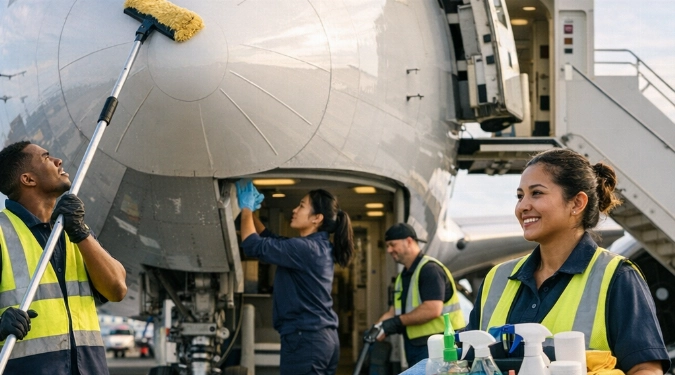
Learn what airplane cleaners do between flights and overnight. Get a clear checklist for skills, badges, and onboarding steps. Use this guide to spot real employers, understand pay factors, and choose a track that can lead into ramp or maintenance roles.
What Airplane Cleaners Actually Do On A Shift
Most work happens on a hard clock. Crews clean during quick turns or deeper overnight resets.
- Cabin trash and seat-pocket sweeps.
- Lavatory service, restock, and spot sanitation.
- Galley wipe-downs and cart staging for catering teams.
- Tray tables, armrests, windows, and touch points.
- Carpet spotting, quick vacuum passes, and entry mats.
- Security-sensitive items tagging and reporting.
Expect tight spaces and repetitive motion. Some stations use HEPA backpack vacuums and electrostatic sprayers for faster coverage.
Where These Roles Sit In The Airport Job Map
Airplane cleaning is one slice of Aircraft Ground Crew Careers. Your employer may be the airline, a cabin services contractor, or a facility vendor.
The work touches other teams every shift. You hand off to gate agents, catering, ramp, and maintenance when you find damage.
Many people start in Airplane Cleaning Jobs and later move into ramp, provisioning, or quality roles. A few use it as a runway into training-heavy paths.
Pay, Scheduling, And What Moves The Number
Hourly pay often clusters between $15 and $24. Lead cleaners and quality checkers often land between $20 and $30.
Overnights can add differentials. Peak travel seasons can add overtime, but it depends on station rules.
Three things move pay faster than tenure alone. They are clearance readiness, attendance, and cross-training on equipment.
Badges, Checks, And Onboarding Steps
Hiring moves faster when your documents are ready. Bring an unexpired photo ID and work authorization documents.
Common Pre-Hire Requirements
- Background check and identity verification.
- Drug testing, often pre-employment and sometimes random.
- Airport badge application with fingerprinting.
- Training on safety, security, and hazardous materials awareness.
Plan for a multi-step timeline. Badge approvals can take days or weeks, so keep your schedule flexible.
Tools, Chemicals, And Safety Habits That Matter
You will use airline-approved products, not household cleaners. Many stations standardize on disinfectant wipes, quat cleaners, and glass cleaner.
Personal protective gear is basic but important. Expect gloves, eye protection, and sometimes masks for spray work.
Learn the labels and dwell times. Spraying and wiping too soon is wasted effort and can fail audits.
Report biohazards to your lead. Do not improvise outside your station’s procedure.
How To Spot Legit Employers And Avoid Bad Gigs
Look for employers that name the airline customer and station. Real postings describe turn times, shift bids, and badging steps.
Common hiring channels include airline career sites and airport contractors. Examples include ABM, ISS, Prospect Airport Services, Unifi, Swissport, and Menzies Aviation.
Be cautious if a company asks for money upfront for “training” or “badges.” Badges are usually managed through the airport process.
Advancement Paths Beyond Cabin Cleaning
Some promotions stay inside cabin services. Others branch into ops roles with higher ceilings.
- Lead, trainer, or quality auditor for cabin teams.
- Ramp agent, bag room, or operations support.
- Cabin appearance coordinator for premium fleets.
If you like troubleshooting, look into Aviation Maintenance Careers. The jump usually requires schooling or documented experience.
Aircraft Maintenance Technician Jobs often need an A&P certificate. Many candidates go through FAA-approved Part 147 schools, then build hours and references.
Quick Self-Assessment Before You Apply
- Can you stand, bend, and lift for long periods?
- Are you comfortable working nights and holidays?
- Can you follow checklists without shortcuts?
- Will you pass security screening and badging?
- Do you handle feedback in fast turnarounds?
If most answers are yes, start with Airplane Cleaning Services contractors at your nearest major station. Ask about shift lengths, team size, and turn-time expectations.
FAQs
What Is A “Turn” Clean Versus An Overnight Clean?
A turn clean targets trash, touch points, and visible resets in minutes. Overnight work adds deeper vacuuming, stains, and detailed galleys.
What Should I Say In An Interview?
Talk about reliability and checklist work. Mention safety habits and how you prioritize tasks under time limits.
Do Cleaners Work Inside The Aircraft Only?
Mostly, yes. Some stations also assign jet bridge trash, gate-area tidying, and supply runs.
References
- Federal Aviation Administration (FAA)
- Transportation Security Administration (TSA)
- Occupational Safety and Health Administration (OSHA)
Disclaimer: The information provided in this article is for educational and informational purposes only. It does not constitute professional advice. Readers should conduct their own research and consult with qualified professionals before making any decisions.
Leave a Reply