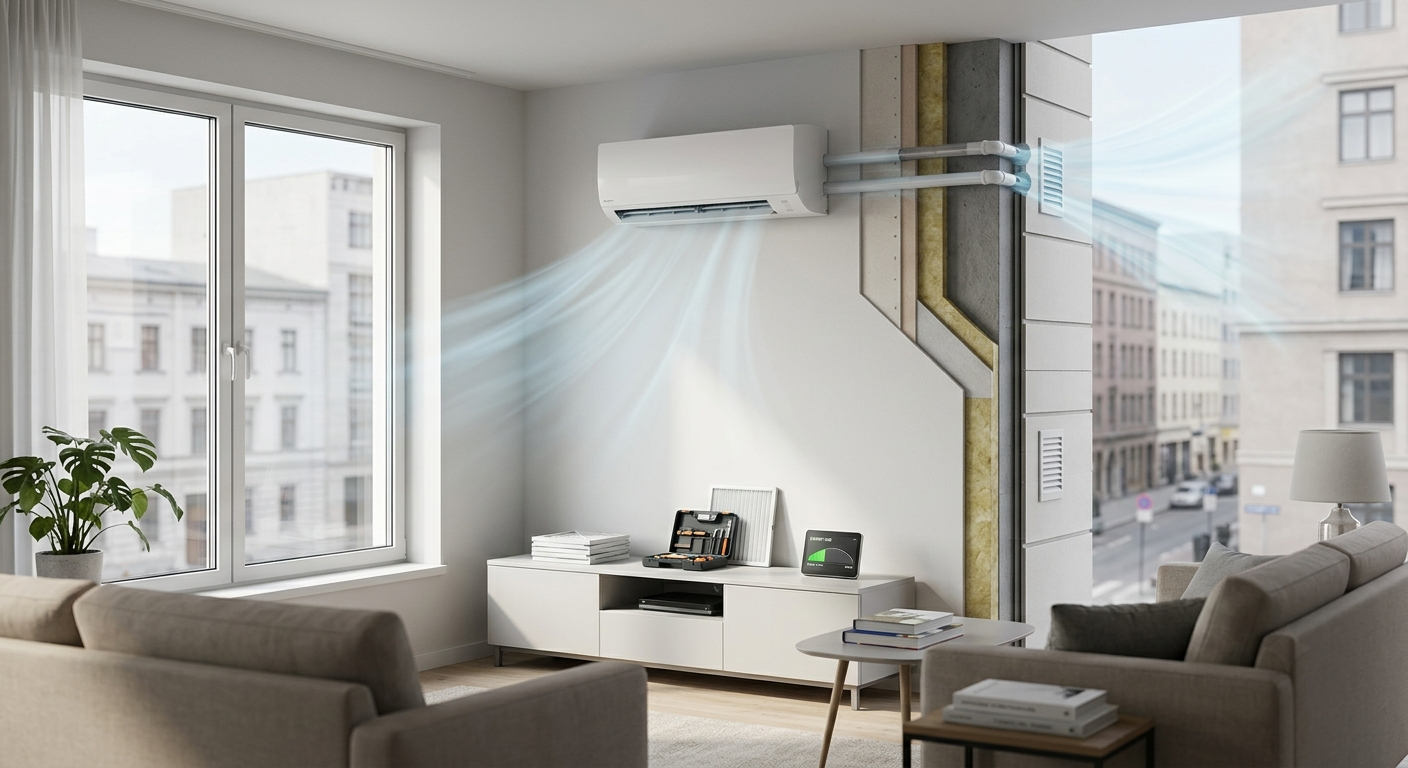
Air conditioners that do not have outdoor units can be a useful consideration for homes and rooms where fitting a conventional external condenser is challenging. These systems are intended to cool indoor spaces while minimizing the requirement for a sizable outdoor component attached to a balcony, wall, or exterior area.

For apartments, smaller properties, rental accommodations, or buildings where exterior changes are restricted, this kind of air conditioner may provide another cooling option. Various designs are available, and learning how they function can help when comparing them with conventional split systems. This guide explains what these air conditioners are, how they operate, where they can be useful, and which factors are worth considering before selecting one.
This article is provided for informational purposes. Because specifications, installation needs, energy use, and suitability can differ among models, buyers should consult the manufacturer’s information before making a purchase.
What Are Air Conditioners Without Outdoor Units?
Air conditioners without outdoor units are cooling systems that operate without the traditional separate condenser positioned outside a building. Rather than placing that component outdoors, the cooling equipment is contained in one indoor unit or incorporated into a wall-mounted configuration. Certain products are often referred to as monoblock, through-wall, or self-contained air-conditioning systems.
One potential advantage is that the exterior of a property may not need to accommodate a conventional outdoor condenser. This may be useful when balconies have limited space, building regulations prevent external equipment, or preserving the property’s appearance is a consideration. Such systems can also be considered for individual spaces, including bedrooms, home offices, studios, or smaller living areas.
However, they are not automatically a substitute for every central or split air-conditioning system. Whether they are appropriate can depend on factors such as room size, climate, installation setup, and cooling requirements.
How Do They Work?
The fundamental cooling process works much like that of other air-conditioning systems. Warm air from the room enters the unit, where a refrigeration cycle removes heat. The cooled air is then returned to the room, helping lower its indoor temperature.
Even without a conventional outdoor condenser, the system needs a method for releasing the heat removed from the room. Depending on the particular design, this heat can be expelled through vents, wall openings, ducts, or built-in ventilation arrangements. Some models need designated openings through an exterior wall, whereas portable versions may rely on an exhaust hose.
Many systems may also provide features including temperature adjustment, fan settings, filters, cooling modes, and dehumidification. Since configurations can vary from one product to another, reviewing the installation instructions and technical specifications is important before purchasing.
Potential Benefits to Consider
Flexibility is one potential benefit of an outdoor-unit-free design. Because a large condenser does not have to be mounted externally, these systems may be better suited to properties where changes to the exterior are restricted. They may also have less visual impact on the building than a conventional split system.
Another possible use is cooling an individual room instead of an entire property. A compact unit may be appropriate for spaces such as a bedroom, study, rental apartment, or another area where focused cooling is preferred.
Installation requirements are another factor to examine. Some models may be easier to install than conventional split systems, although certain options can still require professional installation or modifications to a wall. It is therefore important not to assume that all indoor-only systems can be installed without any installation work.
Energy Use, Noise, and Maintenance
When selecting an air conditioner, energy consumption is an important factor to compare. Efficiency can differ substantially between models, meaning that reviewing the manufacturer’s energy rating and listed power consumption may offer a more meaningful comparison than considering the system type by itself.
Operating noise can also be relevant, especially if the air conditioner will be used in a bedroom or workspace. With many of the components positioned indoors, certain models may generate noticeable operating noise. Checking the manufacturer’s stated noise rating can therefore help buyers compare available options.
Maintenance remains necessary as well. Filters may require cleaning or replacement, vents need to remain clear, and drainage or ventilation components should be cared for according to the manufacturer’s recommendations. Following the appropriate maintenance routine can help the system continue operating consistently over time.
Choosing the Right Option
Before buying an air conditioner without an outdoor unit, it is worth considering the room’s size, anticipated cooling needs, available ventilation, installation requirements, and applicable local building rules. A model intended for a small bedroom, for example, may not be suitable for a large open-plan living space.
Comparing cooling capacity, energy efficiency, operating noise, controls, warranty coverage, and maintenance needs can also be helpful. When wall openings or other modifications are required, those installation expenses should be considered as part of the overall cost comparison.
Ultimately, air conditioners without outdoor units can be a practical cooling choice for certain homes and spaces. They may be especially worth considering when exterior equipment is inconvenient or subject to restrictions. By reviewing technical specifications, installation requirements, and expected operating conditions, buyers can assess whether this type of air-conditioning system is suitable for their particular space.